The Out-of-Body Experience (OBE) page has moved to new domain: https://obe-nde.eu/ (from obe.rebbe.se/wp-admin)
Starting to read today:
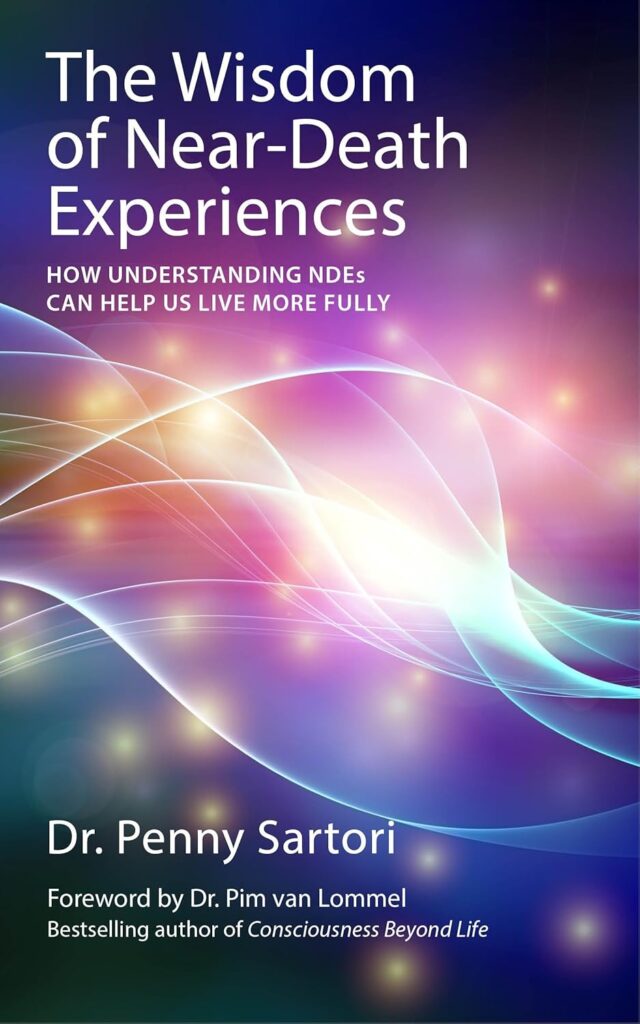
Wisdom of Near Death Experiences: How Understanding NDEs Can Help Us Live More Fully
Pocketbok – 18 Februari 2014
Engelska utgåvan av Dr. Penny Sartori (Författare), Dr. Pim van Lommel (Förord)
https://www.amazon.se/Wisdom-Near-Death-Experiences-Understanding/dp/1780285655
Drawing on a 5-year clinical study of near-death experiences, a doctor presents riveting patient stories to explore how NDEs can empower us and society as a whole.
By trying to pathologize NDEs, are we missing out on what they can tell us about life?
Dr. Penny Sartori is a registered nurse who began researching Near-Death Experiences (NDEs) in 1995 after one of her long-term intensive care patients begged her to let him die in peace. Inspired by this encounter, she went on to research NDEs in a PhD program, where she learned profound spiritual lessons and made startling discoveries that she now shares in The Wisdom of Near-Death Experiences.
During her academic work, Dr. Sartori studied three samples of ICU patients during a five-year period. Here, she recounts the eye-opening stories of those patients who experienced NDEs and out-of-body experiences (OBEs). In one group, as many as 18% of patients experienced an NDE—though Patient #10 stood out among the others. After being unresponsive, he awoke to report he had experienced an OBE. He was able to describe what happened in the hospital room while he was unconscious and claimed he met not only his deceased father but a Jesus-like figure. Most shocking of all, he had regained the use of his hand—which had been paralyzed since birth.
When talking about the biggest takeaways from her research, Dr. Sartori shares how her findings have made her question the common belief that the brain gives rise to consciousness. Most importantly, she has gained a deeper appreciation for death—an experience she now views with less fear and anxiety.
In addition to detailing dozens of case studies, The Wisdom of Near-Death Experiences also discusses childhood NDEs, the differences in NDEs among different cultures, and the after-effects of NDEs.
Components of the NDE (from Chapter 1)
Hearing the News of Being Close to Death
Some people report hearing bystanders saying that they are dead or the doctor/nurse saying such things as ‘She’s arrested’, ‘We’re losing him’ or that the person is not going to survive.
Noise
As the person ‘leaves’ the body they may report hearing a buzzing, whistling, whirring or humming sound, or a click.
The Out-of-Body Experience (OBE)
The out-of-body component can occur alone, with no other components of the NDE. People report suddenly being drawn upwards out of their body and finding themselves at a point close to the ceiling, above the emergency situation, looking down on themselves. At first they may not recognize themselves, but then notice other people such as doctors or nurses attending to their body. Often there is a sense of weightlessness and they feel that the ‘real them’ is the one looking down on the body, which is something they no longer identify with or associate as a part of themselves. Remarkably, some blind people have reported NDEs which also contain the OBE component.
Hi, this is a comment.
To get started with moderating, editing, and deleting comments, please visit the Comments screen in the dashboard.
Commenter avatars come from Gravatar.